Retrofit Garage Door Insulation: Can You Insulate an Existing Door?

Home / Installation & Technical How-To / Retrofit Garage Door Insulation: Can You Insulate an Existing Door?
If you already have a working sectional or tilt garage door, you may be able to add a purpose-made retrofit garage door insulation system instead of replacing the entire door. The right approach depends on your door type, panel profile, condition, clearances and the way the insulation is supported once the door moves.
 
A garage door is different from a stationary wall. It opens, closes, flexes and carries a carefully balanced load. That means a retrofit should be treated as a door-specific upgrade, not as a matter of attaching general building insulation to a metal surface.
 
This guide explains what to check before insulating an existing garage door, which door types are commonly suitable, and how to compare retrofit systems on more than a headline material claim. It is a year-round decision: the aim is to help reduce heat transfer through the garage door in both hot and cold conditions.

Which Existing Garage Doors Can Be Retrofitted?

Many sectional (panel-lift) and tilt garage doors can be assessed for a retrofit insulation system. These door types have separate panels or a defined internal structure that can allow a purpose-made panel system to be securely supported.
 
However, every door should be checked before ordering. Panel depth, internal ribs, hinges, lifting hardware, clearance at the sides and top of the door, and the condition of the door all matter. A door that is damaged, unusually profiled, poorly balanced or already close to its operating limits may need professional assessment first.
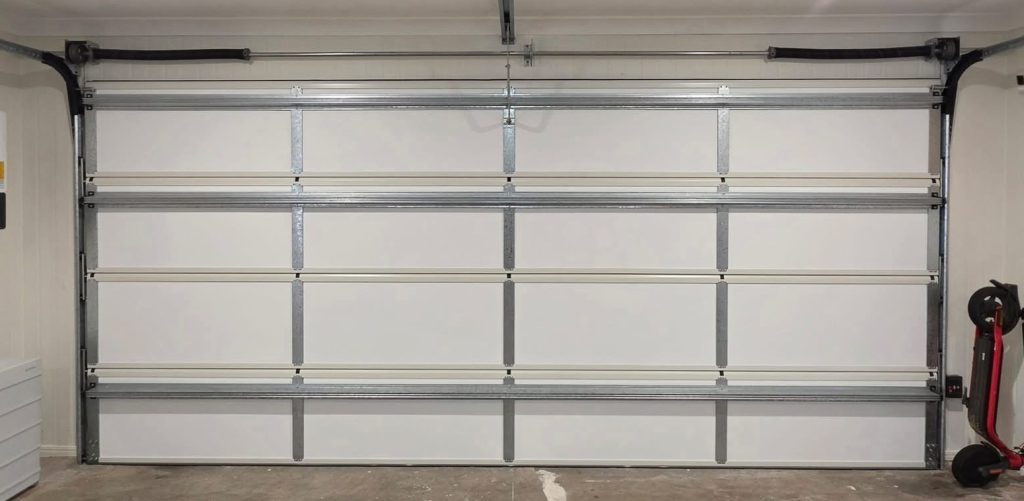
ThermaDoor retrofit garage door insulation installed on an existing sectional garage door
ThermaDoor retrofit insulation fitted to an existing sectional garage door.
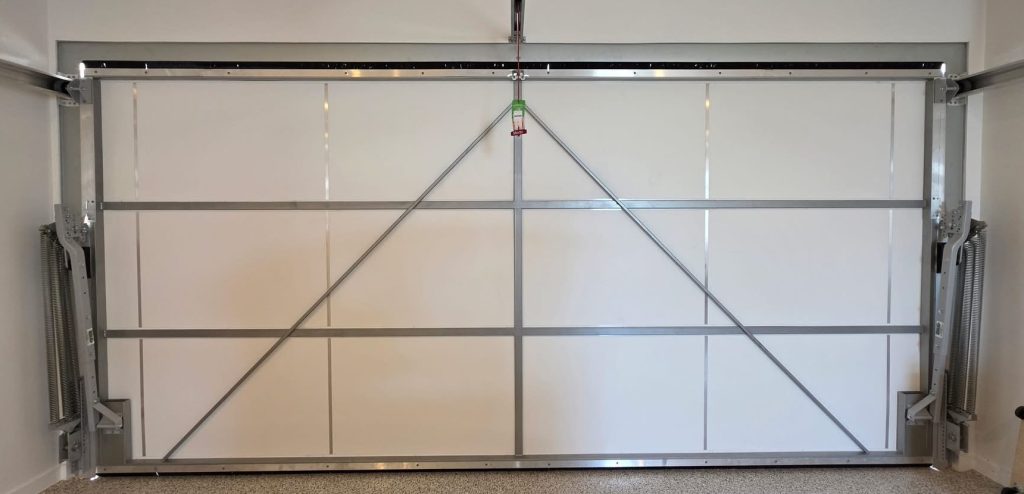
ThermaDoor retrofit garage door insulation installed on an existing tilt garage door
ThermaDoor retrofit insulation fitted to an existing tilt garage door.

Roller doors are different. They roll tightly into a drum, so a rigid panel-and-air-cavity retrofit system may not have the space required to operate correctly. Do not assume that insulation suitable for a sectional or tilt door will also suit a roller door. Read more about why ThermaDoor does not insulate roller doors in our blog Failed Reflective Foil Insulation

Four Checks Before Retrofitting a Garage Door

1. Check the Door Type and Panel Profile

Start with the door itself. Measure the internal width and height of each panel area, then look at the door’s internal profile, ribs, hinges and lifting mechanism. A purpose-made retrofit system must fit within the available space without interfering with the way the door travels.
The goal is not simply to make insulation fit. The goal is to ensure the garage door can still open, close and operate as intended once the insulation is installed.

2. Consider Added Weight and Door Balance

Any material added to a garage door changes the system’s total weight. Garage-door springs, cables, tracks, opener settings and safety features work together to balance that door. A lightweight retrofit system minimises the added load, but the effect on a particular door still depends on its existing condition and hardware.
Before and after a retrofit, make sure the door remains correctly balanced and operates smoothly. If you are unsure, ask a qualified garage-door technician to assess the door and advise whether adjustment is required.

3. Check How the Insulation Is Supported

A moving garage door needs an insulation system that stays in position as the door opens and closes. Avoid treating the door like a static wall. A suitable retrofit system should have a support method that accounts for movement, vibration and expansion and contraction of the metal door.
ThermaDoor is designed as a mechanically supported panel system for sectional and tilt doors. This helps the insulation move with the door rather than relying on a surface attachment alone. For detailed DIY fitting information, see the DIY garage door insulation guide.

4. Keep the Air Cavity and Moisture Management in Mind

A metal garage door can become very hot or cold. In cooler conditions, temperature differences and indoor humidity can contribute to condensation on metal surfaces. The way an insulation system sits against—or away from—the door therefore matters.
ThermaDoor uses purpose-made spacers to maintain an air cavity between the panel and the door. Its Sisalation foil backing forms part of the composite system and acts as a Class 2 vapour barrier. For the detailed explanation of how the layers and air cavity work together, read what makes composite garage door insulation different.

What Should You Compare in a Retrofit Insulation System?

A retrofit system should be assessed as a complete installed solution, not simply as a foam board or foil sheet in isolation. Before choosing, ask the supplier these questions.

1 Is it designed for a moving sectional or tilt garage door?
2 How is the insulation supported when the door opens and closes?
3 Does the system maintain the required air cavity behind any reflective foil layer?
4 What is the total added weight for my door size?
5 Is there documented thermal performance for the installed garage-door assembly?
6 What door types, conditions and panel profiles are unsuitable?
7 What fitting guidance and warranty information are provided?

When comparing thermal performance, look for the performance of the complete installed door assembly, rather than relying only on the rating of an insulation material by itself. ThermaDoor publishes installed-assembly R-values of R1.43 in winter and R1.39 in summer, supported by an engineering report. Read the garage door insulation R-value guide for a fuller explanation of this distinction.

DIY Retrofit or Professional Installation?

A DIY retrofit can be a practical option where the door is compatible, in sound condition and you are comfortable measuring, cutting and fitting a purpose-made panel system. ThermaDoor DIY kits are supplied for suitable sectional and tilt doors and can be delivered Australia-wide.
 
Professional installation may be the better route if the door is older, non-standard, damaged, difficult to measure, or if you would prefer a garage-door professional to assess it before fitting. Check the ThermaDoor distributor directory to see whether professional installation is available in your area.
 
The choice is not about one route being right for every door. It is about choosing the route that matches the door, the site and your level of confidence.

Questions to Ask Before You Retrofit an Existing Garage Door

Is my door type suitable? Confirm that the system is designed for your type of sectional or tilt door and that there is enough room within the panel profile.
 
Will the door still operate correctly? Check that the selected system is lightweight, mechanically supported and does not interfere with hinges, tracks, seals or clearances.
 
Is the product designed for a moving door? A garage door moves and flexes every day. It is not a wall, ceiling or floor. The system should be designed and documented for this application. Always ask for the datasheet and read the small print.
 
Can I verify the claimed performance? Ask for evidence of R-values. Ensure current installed-door performance information and the supporting report or data sheet is provided.
 
What is my installation route? Decide whether your door is suitable for DIY fitting or whether it should be assessed and installed by a professional.

Frequently Asked Questions About Retrofitting Garage Door Insulation

Can I Retrofit Insulation to an Existing Sectional Garage Door?

Many existing sectional garage doors can be assessed for a retrofit insulation system. Check the panel profile, available internal space, door condition, hinges and clearances before ordering. A purpose-made system should be selected for the way a sectional door moves.

Many tilt doors can also be assessed for retrofit insulation. As with sectional doors, suitability depends on the internal door structure, clearances, total added weight and the condition of the door. Measure carefully and seek professional advice if the door is older or unusual.

Roller doors need separate consideration because the door curtain rolls around a drum. A rigid panel system requires space and support that may not be available on a roller door. Check suitability with the supplier before adding any insulation material.

Check the door type, panel profile, internal clearance, condition, added system weight, fitting method and whether the door will remain correctly balanced and operational after installation. Also ask whether the system maintains an air cavity and provides documented installed-door performance.

DIY may suit a compatible door and an owner who is comfortable measuring and fitting a purpose-made kit. Professional installation is a good option where an authorised installer is available, the door needs assessment, or you would prefer assistance with the process.

Ready to make your garage more comfortable?

Get exact DIY pricing online or find professional installation near you.

DIY kits ship Australia-wide · Professional installation available through authorised distributors

Picture of Peter Hinton
Peter Hinton

Peter is a licensed builder with over 45 years of experience in the construction industry. In 2012, his expertise in energy efficient construction inspired the invention of ThermaDoor Premium garage door insulation - the original purpose made garage door insulation in Australia.

ThermaDoor is the manufacturer of the products discussed in this article and has a commercial interest in their sale. While every effort has been made to ensure the accuracy of the information presented, readers are encouraged to conduct their own research and consult qualified professionals before making purchasing decisions. All R-values cited are independently verified assembly R-values under AS/NZS 4859.1/.2:2018.
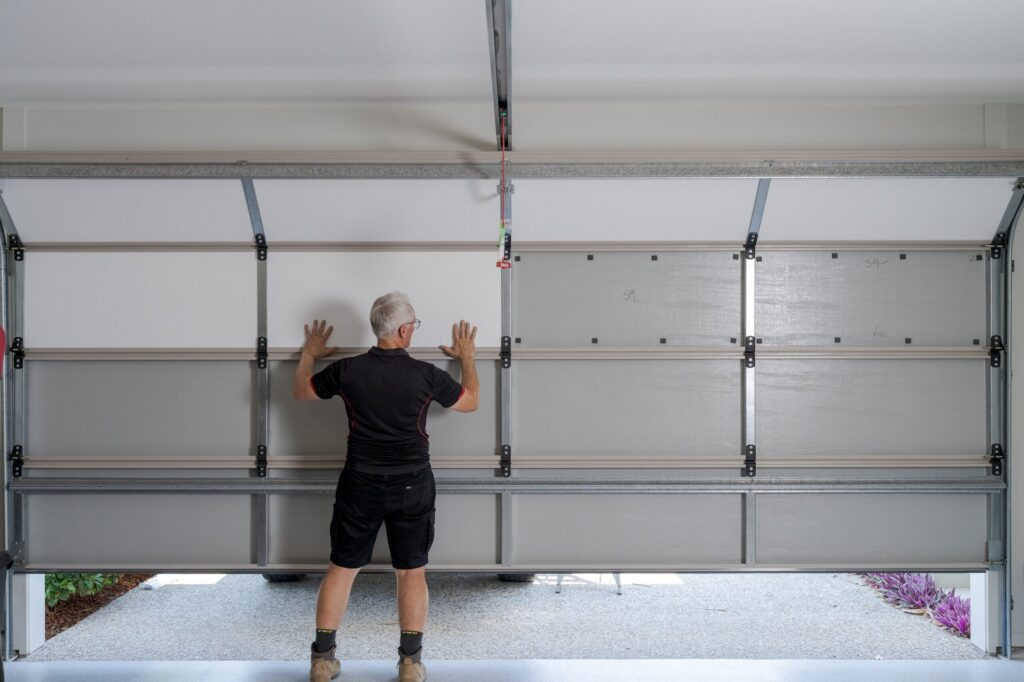
Installer fitting purpose-built garage door insulation panels to reduce summer heat and keep an Australian garage cool without air-conditioning

DIY Kit Pricing Guide

The prices below are a guide only. For your exact price including freight to your door, grab a tape measure and use our shop — it takes two minutes, no account needed, and you’ll know exactly what you’re up for before you commit to a thing.

Door Size Panels Price (from)
Single Door8 panelsFrom $330
Single Door (Large)10 panelsFrom $380
Double Door16 panelsFrom $660
Double Door (Large)20 panelsFrom $760

* Prices include GST. Freight not included — calculated at checkout based on your postcode. No obligation to buy.

Most DIYers grab a tape measure and have their exact price in just a couple of minutes

Not ready to measure up just yet? Fill in our enquiry form  — allow a few days during busy periods.

ThermaDoor Installation

Let our experts handle installation for you
Or Ask Us A Question

Call or send an enquiry below to see if we have an installer in your area.

Make an Enquiry