
ThermaDoor Trade & Industry Hub
Technical garage door insulation resources for builders, architects, designers, energy assessors, and garage door installers
Everything on this page — R-values, standards references, NatHERS data, and engineering verification — is available as a single print-ready document for your files.
Australia's Only Purpose-Made Garage Door Insulation
Verified R1.43 assembly data backed by engineering reports —
for homeowners, insulation companies, builders, architects, designers and energy assessors.
Est. 2012
Australia's Original System
Verified R-Values
R1.43 Winter / R1.39 Summer

Australian Made
Licence 7177
Lightweight
About 7kg - Double Door
Composite Technology
Purpose Built for Garage Doors
15 Year Warranty
Complete ThermaDoor Panel System
What Makes ThermaDoor Different
Most products sold as garage door insulation are generic building materials — wall batts, PIR panels, foil wraps, plain polystyrene sheets, peel-and-stick rubber pipe lagging adapted for a use they were never designed for. They address one heat transfer mechanism at best, and none were engineered for the daily movement and stress of a garage door.
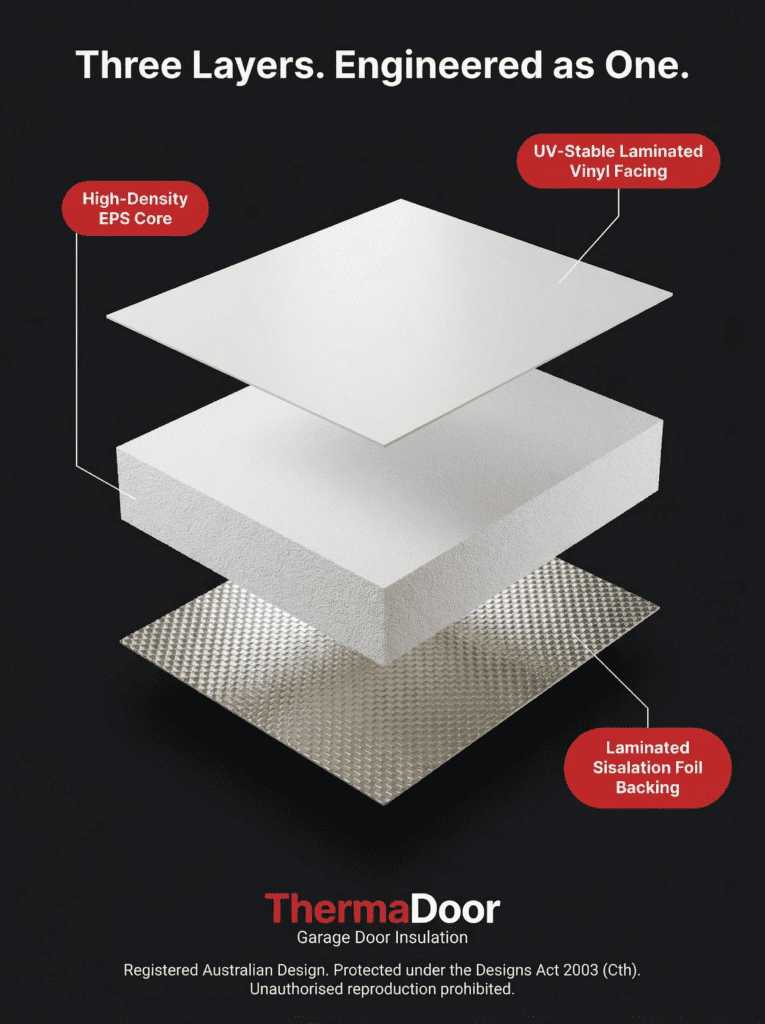
ThermaDoor is different — invented by a builder, it is a true composite insulation system: a factory-laminated EPS core, sisalation foil radiant barrier, and maintained air cavity that each contribute measurably to the independently verified assembly R-value. No other garage door insulation in Australia combines all three.
Every panel is engineered specifically for the daily movement and thermal demands of a garage door system, and independently tested to Australian Standards. Here’s what’s inside every kit.
Three Layers. Engineered as One
High-Density EPS Core
35mm EPS core provides the primary thermal resistance in the ThermaDoor composite panel.
READ TECHNICAL DETAIL
Flame-retardant, construction-grade expanded polystyrene foam is the primary insulator in every ThermaDoor panel. It slows conducted heat transfer through the door, keeping your garage significantly cooler in summer and warmer in winter. As the primary insulator in the composite system, it works with the laminated Sisalation foil backing and engineered air cavity to deliver the verified installed-assembly R-value.
Sisalation Foil Backing
Laminated Sisalation foil reflects radiant heat across ThermaDoor’s engineered internal air cavity.
READ TECHNICAL DETAIL
Laminated to the rear of each panel, construction-grade Sisalation foil forms the reflective layer in the ThermaDoor composite system. Its low-emissivity surface works across the engineered internal air cavity, maintained by purpose-made foam packers. The foil also functions as a Class 2 vapour barrier and achieves Group 1 fire performance classification — it’s the same foil used to wrap Australian homes.
UV-Stable Vinyl Facing
UV-stable laminated vinyl facing helps protect the EPS core and lamination bond, maintaining a clean, durable interior finish.
READ TECHNICAL DETAIL
The composite system only performs if the materials stay intact. This durable, flame retardant, vinyl facing protects the EPS core and lamination bond from Australia’s harsh climate, resisting fading, cracking and weathering year after year. The result is a clean, professional finish that holds its appearance and structural integrity for the life of the door.
Why Composite Insulation Outperforms Single-Layer Products
- Foil-only products reflect radiant heat but provide negligible resistance to conducted heat once the steel skin has absorbed and transferred it
- Foam-only products (EPS or PIR) resist conducted heat but do not address radiant heat transfer across the air cavity
Proven by the Trade: Independent Thermal Data
When Melbourne builder John Guida from Stronghold Construction installed ThermaDoor on his own property, he used a professional FLIR MR277 thermal imaging camera to document the exact performance difference. The readings were taken on a typical July winter day with the sun directly on the door.
Uninsulated Panel
ThermaDoor Panel
VERIFIED FLIR RESULT
Surface Temp Reduction
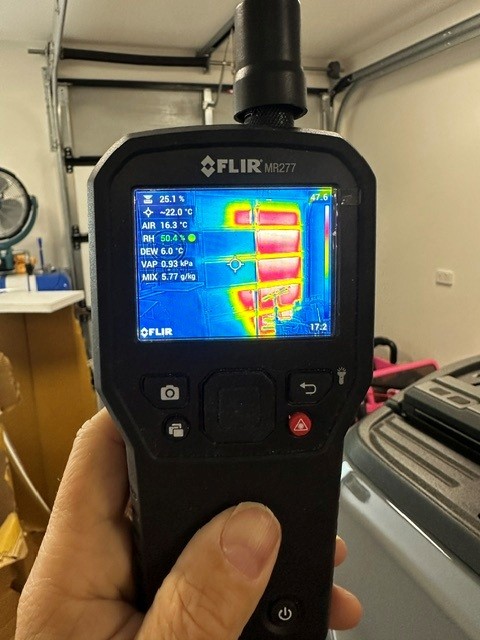
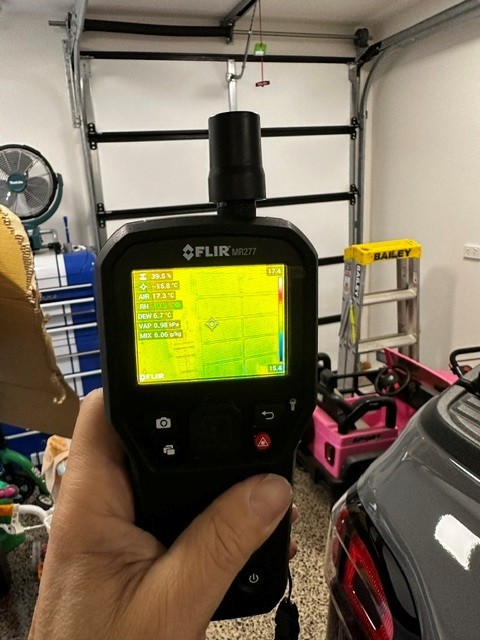
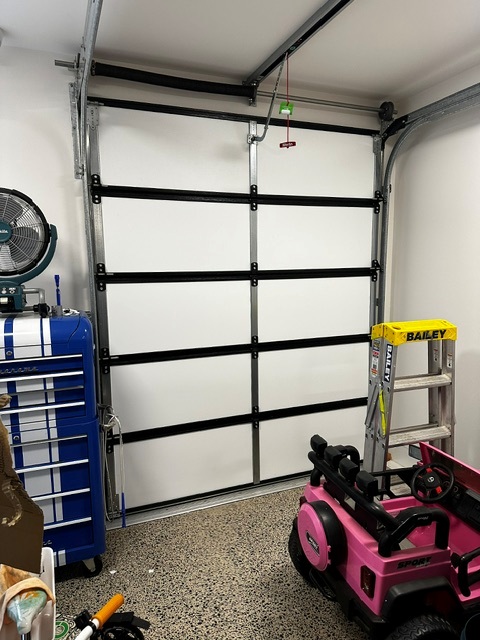
“The system works a treat. 30 degrees difference between insulated and non-insulated panels”.
— John Guida, Stronghold Construction
Partner With Australia's Leading Garage Door Insulation
Interested in Becoming a ThermaDoor Distributor?
- Customers ask for ThermaDoor by name — pre-sold demand before you quote
- Reliable supply and delivery — give customers a firm timeline, not a maybe
- No callbacks — factory-laminated panels do not delaminate or sag
- NCC aligned — relevant for new build and renovation quoting
What Our Distributors Say
Chloe from Show It Off Home Improvements (Hervey Bay & Fraser Coast) shares her experience as a ThermaDoor distributor.
“One of the easiest companies we have ever worked with. Customers ask for ThermaDoor by name — and the reliable timelines mean we can give customers a firm date.”
— Chloe, Show It Off Home Improvements, Hervey Bay & Fraser Coast
See the Difference ThermaDoor Makes
Real installs. Real results. Read the full comparison.
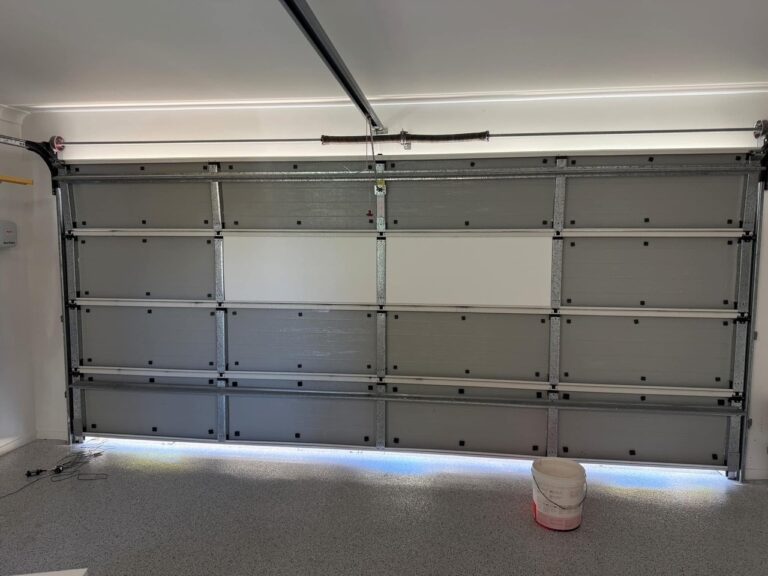
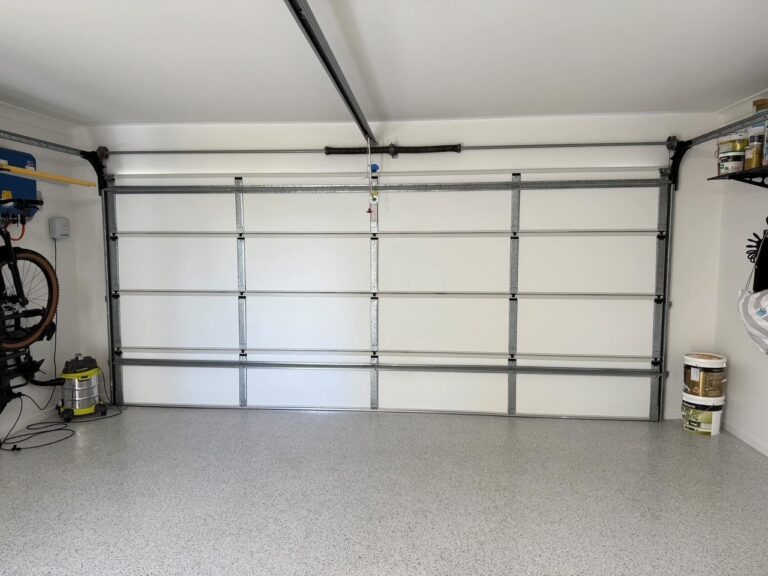
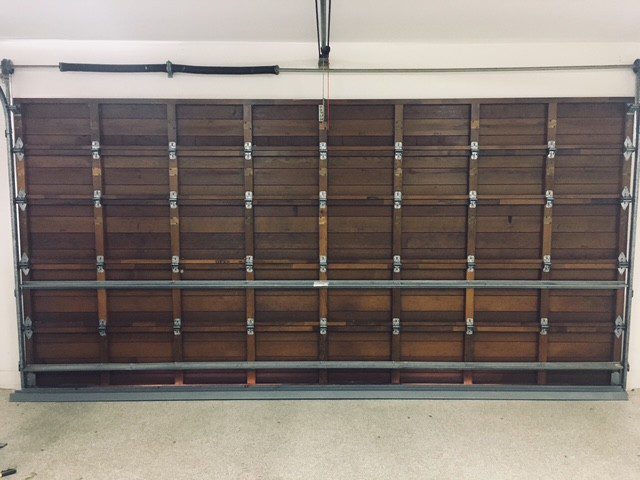
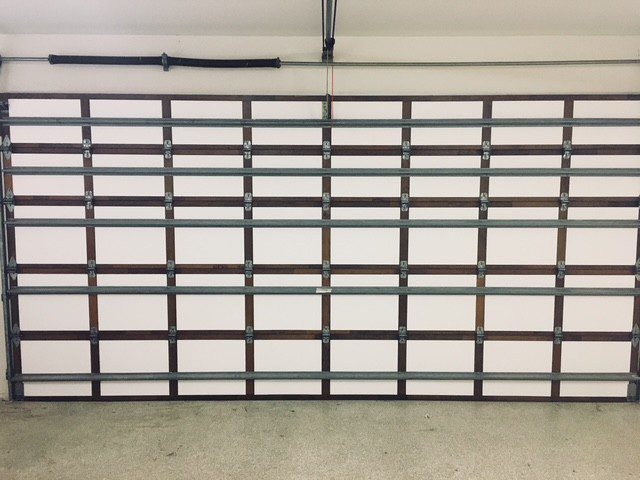

Want to know more about foil products used as garage door insulation? Read our blog Failed Reflective Foil Insulation: Common Mistakes We See Across Australia.
ThermaDoor 15 Year Product Warranty
Every ThermaDoor panel is backed by a 15-year product warranty covering defects in materials and manufacturing across the complete ThermaDoor panel system, including the EPS core, laminated vinyl facing and Sisalation foil backing. It reflects our confidence in Australian-made, purpose-built garage door insulation designed for the daily movement of a garage door.
For Insulation Companies, Builders, Architects, Designers & Energy Assessors
ThermaDoor is Australia’s only purpose-built composite technology garage door insulation with independently verified, dual-season complete installed assembly R-values — R1.43 (winter) / R1.39 (summer) — calculated to AS/NZS 4859.2:2018 and accepted as NatHERS inputs. Designed from the ground up for sectional and tilt garage doors, it is the only product that allows your energy assessor to include the garage door in thermal modelling with confidence.
Verified Assembly R-Values
Independently calculated: R1.43 winter / R1.39 summer
READ TECHNICAL DETAIL
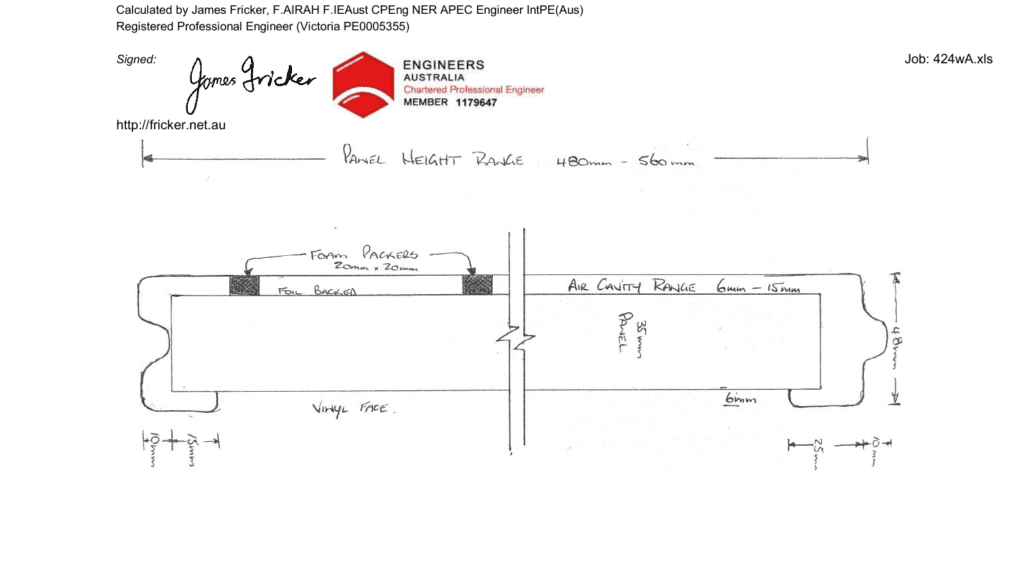
James M Fricker Pty Ltd calculated the complete 35mm ThermaDoor garage door insulation assembly to AS/NZS 4859.1 and 4859.2:2018. The assessment considers the steel garage door, specified 10mm unventilated reflective air gap, EPS core, laminated foil backing, vinyl inner skin and associated heat-flow paths. Report i424b, calculated 13 May 2025, records an Overall Total Thermal Resistance of R1.43 in winter and R1.39 in summer.
Fire Performance & Vapour Management
Group 1 fire performance classification and a Class 2 vapour barrier
READ TECHNICAL DETAIL
ThermaDoor uses laminated Sisalation foil backing as part of its complete composite garage door insulation system. The foil achieves Group 1 fire performance classification under AS 1530.2 and provides a Class 2 vapour barrier. Its low-emissivity surface also contributes to thermal performance across the specified internal air cavity.
Energy Assessment Support
Engineering-backed assembly R-values for energy assessment review
READ TECHNICAL DETAIL
ThermaDoor provides independently calculated garage door assembly R-values and product documentation for use by builders, architects and energy assessors when reviewing a home’s thermal design. Where a garage is attached to, below or beside living areas, the garage door may be relevant to the broader energy-assessment discussion. Final NatHERS, BASIX, BESS and other rating outcomes depend on the complete building design and assessment method.
Access specification documentation and assessor resources → Home Energy Rating & Garage Door Insulation
Why the Garage Door R-Value Matters in NatHERS & the NCC
Under Australia’s National Construction Code (NCC):
- All building fabric insulation must meet AS/NZS 4859.1:2018 and
- Use total/system R-values must be determined in accordance with AS/NZS 4859.2:2018
This is the same framework your energy assessor applies in performance modelling. This means including a tested garage door R-value can make the difference between reaching and not reaching 7-star targets – especially when margins are tight.
That’s where ThermaDoor garage door insulation stands out.
ThermaDoor is the only Australian garage door insulation brand that publishes dual-season, door assembly R-values -R1.43 (winter) / R1.39 (summer) – now a requirement under the NCC.
Key Specs (At A Glance)
| Specification | Detail |
|---|---|
| Application | Sectional and tilt garage doors — new builds, major renovations and existing homes |
| Panel Thickness | 35mm |
| Declared R-Value (Winter) | R1.43 |
| Declared R-Value (Summer) | R1.39 |
| R-Value Type | Dual-season door assembly (system) values — not material or wall values |
| Standards Framework | AS/NZS 4859.1:2018 (materials and test methods) and AS/NZS 4859.2:2018 (total/system R-value determination) |
| Fixing Method | Mechanical fixing — no adhesive or glue |
| Flammability | Flame-retardant EPS core — tested to AS 1530.2 |
| NCC Compliance | Aligned with NCC building fabric provisions |
| Energy Assessment Support | Declared values suitable for NatHERS 7-Star design inputs → Declared values suitable for NatHERS, BASIX (NSW), BESS (VIC) and other state-based energy assessment inputss |
Thermal bridging makes garage doors a special case – see our detailed blog on Why Your Garage Door Has An R-Value of Zero – And How to Fix it
NatHERS Modelling for New Homes & Whole of Home Energy Assessment
| Scenario | Climate Zone | Without ThermaDoor | With ThermaDoor | Star Improvement |
|---|---|---|---|---|
| Unconditioned Garage Garage not air conditioned | Brisbane (CZ10) | 6.8 Stars | 7.2 Stars | +0.4 Stars |
| Unconditioned Garage Garage not air conditioned | Toowoomba (CZ5) | 5.4 Stars | 5.8 Stars | +0.4 Stars |
| Conditioned Garage Garage is air conditioned | Brisbane (CZ10) | 5.8 Stars | 7.2 Stars | +1.4 Stars |
| Conditioned Garage Garage is air conditioned | Toowoomba (CZ5) | 4.9 Stars | 5.9 Stars | +1.0 Stars |
Modelling results are indicative only. Each project will vary based on dwelling design, orientation, climate zone, and construction type. These results should be used as a guide only — each project must be assessed and confirmed by a qualified NatHERS accredited energy assessor. Modelling conducted using an R1.4 input value (based on the verified R1.43 winter assembly R-value, calculated to AS/NZS 4859.2:2018).
Garage Door Insulation FAQs for Builders & Energy Assessors
Can I use wall or ceiling R‑values for a garage door in NatHERS?
No. Wall and ceiling R-values are calculated for static building elements. A garage door is a moving assembly with different thermal properties — it requires a door assembly R-value calculated specifically to AS/NZS 4859.2:2018 to be used as a valid NatHERS input.
Where do the ThermaDoor R‑values come from?
ThermaDoor R-values are independently calculated by James M Fricker, F.AIRAH F.IEAust CPEng, Registered Professional Engineer (Victoria PE0005355), to AS/NZS 4859 Parts 1 & 2:2018. The declared values are R1.43 (winter) and R1.39 (summer) for the door assembly.
Does garage‑door insulation help achieve 7‑Stars?
Yes — when the garage door has a declared assembly R-value supported by engineering documentation, your energy assessor can include it in NatHERS thermal modelling. In homes where the garage is attached or the garage door faces a thermally significant direction, this can make a measurable difference to the star rating outcome, particularly when margins are tight.
Is this recognised in the NCC?
ThermaDoor R-values are calculated to AS/NZS 4859.2:2018, which is the methodology referenced by the NCC for total/system R-value determination. The product meets the framework the NCC requires for insulation to be assessed in performance modelling.
What about a material R-value (sometimes referred to as a 'standalone' R-value)?
A material R-value measures only the insulation layer in isolation. An assembly R-value — which is what ThermaDoor publishes — accounts for the full door system including air gaps, facing materials, and thermal bridging. The assembly R-value is what NatHERS assessors need and what the NCC methodology requires.