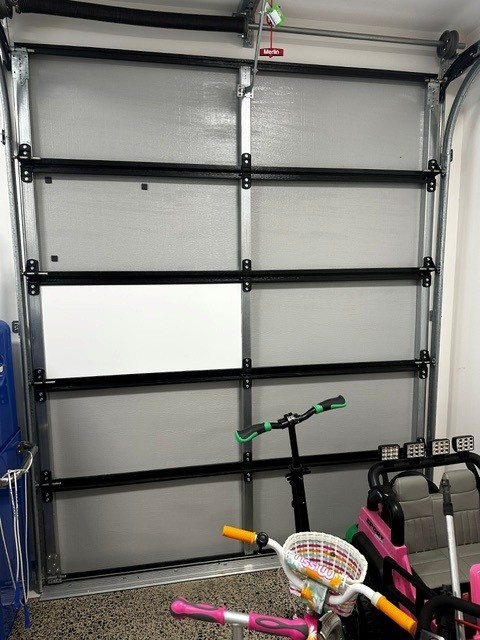
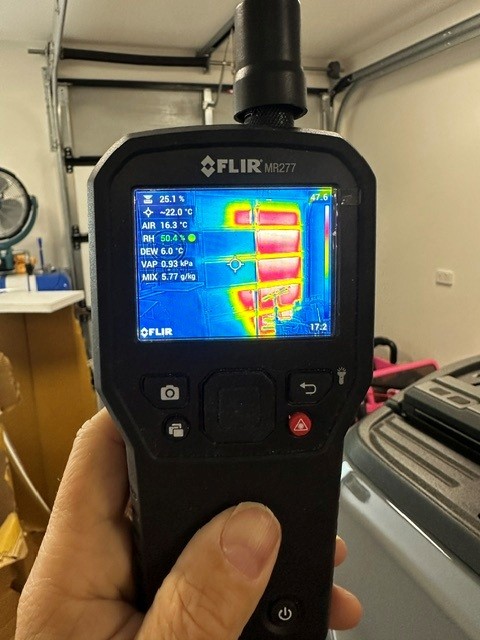
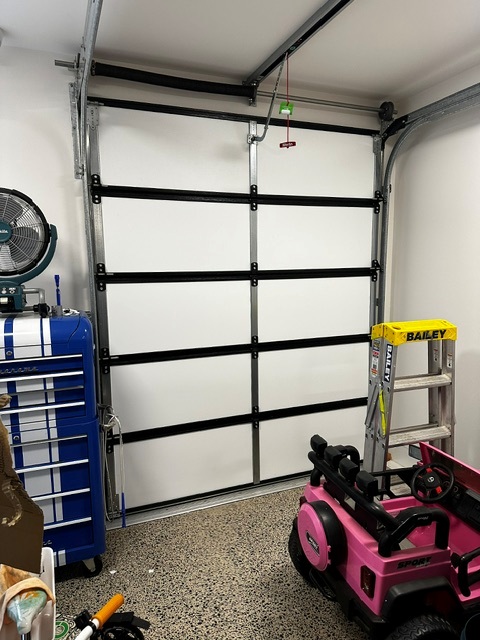
Once John completed the full installation, he pointed the FLIR camera at the entire door.
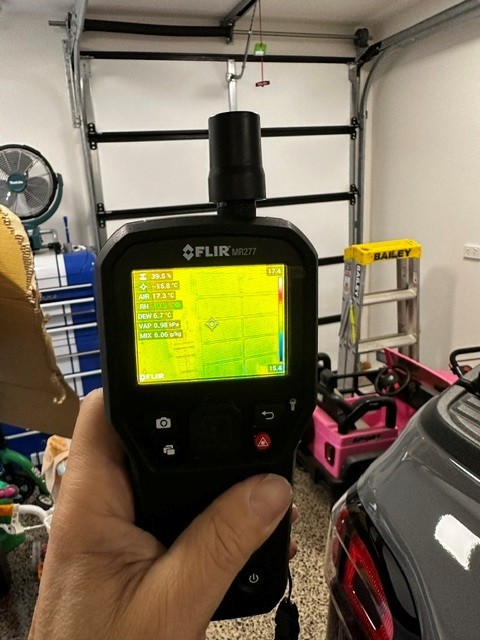
| Uninsulated | With ThermaDoor | |
|---|---|---|
| Dew point | ~22.0°C | ~15.8°C |
| Moisture mix | 5.77 g/kg | 4.06 g/kg |
| Condensation risk | High | Eliminated |
John is a professional builder. He is not a paid endorsement. He bought the product, installed it himself using the DIY garage door insulation kit, tested it with his own professional equipment, and reported back unprompted. His specific mention of the spacer system is telling — it is the kind of detail only someone who has actually done the installation would notice and comment on.

Australia’s climate varies dramatically from state to state — but almost every region shares at least one of two garage problems, and most share both.
The summer problem: Radiant heat from the sun turns an uninsulated metal garage door into a radiator. The garage door is the largest single thermal surface in the room and the primary source of heat gain. John's data shows ThermaDoor reduces that surface by 30°C — and as his July readings prove, this is not just a summer issue. The sun heats an uninsulated door year-round.
The winter problem: In cooler months across southern Australia — Victoria, NSW, South Australia, Western Australia, Tasmania and the ACT — overnight temperatures drop far enough to turn an uninsulated metal door into a condensation surface. Moisture forms, drips, and damages everything stored inside. John's dew point data shows ThermaDoor eliminates the conditions that cause condensation to form.
Yes — and the FLIR thermal data from this post proves it. An independent test using a professional FLIR MR277 thermal imaging camera recorded a 30°C reduction in surface temperature between an uninsulated panel and a ThermaDoor insulated panel on the same door at the same moment. The insulated panel sat at 17.4°C while the bare metal panel beside it was radiating at 47.6°C.
Garage door condensation occurs when the metal surface of the door drops below the dew point of the air inside the garage. On cold nights, an uninsulated steel door rapidly loses heat and its surface temperature falls below the dew point, causing moisture in the air to condense on the door. This is often mistaken for a leak. Insulating the door raises the interior surface temperature, keeping it above the dew point and eliminating condensation entirely — as John Guida’s FLIR data confirmed.
The most effective solution is to insulate the garage door panels. The dripping water is condensation, not a leak — it forms when the cold metal door surface drops below the dew point of the warmer air inside the garage. Adding insulation creates a thermal barrier that keeps the interior door surface closer to the room temperature, preventing condensation from forming. ThermaDoor DIY kits can be installed without removing the door or hiring a tradesperson.
Yes. ThermaDoor is designed specifically for DIY installation. The panels clip into the existing door sections without drilling, cutting or removing the door from its tracks. The spacer system — which John Guida specifically called out as working “a treat” — ensures correct positioning and a clean finish. Most sectional doors can be completed in a few hours. DIY kit sizes and pricing are available here.
Yes — it solves both problems. In summer, an uninsulated metal door absorbs solar radiation and radiates that heat into the garage. The FLIR data in this post recorded 47.6°C on an uninsulated panel on a winter day when the sun was on the door — on a 40°C Australian summer day the same door would be significantly hotter. ThermaDoor’s insulation and foil backing reflect radiant heat and dramatically reduce the heat load entering the garage year-round.
For most Australian homes, yes. A garage door is typically the largest uninsulated surface in the house — often larger than all the windows combined. Heat entering through an uninsulated door raises the temperature of the garage, which in turn affects any adjoining rooms. For garages used as workshops, gyms or living spaces, the comfort difference is immediate. For homes with condensation problems, it eliminates the issue entirely. ThermaDoor DIY kits start from a fraction of the cost of a new insulated door.
Your ThermaDoor Installation Options
ThermaDoor is available as both a DIY garage door insulation kit and through professional supply-and-install via our authorised distributor network.
Option 1
Measure your garage door panels, order the correct ThermaDoor kit, and install the insulation yourself using our step-by-step guides. ThermaDoor DIY kits are designed for suitable sectional and tilt garage doors, with no adhesives and no permanent changes to the door.
For a general guide, indicative DIY kit pricing is shown below.
| Door Size | Panels | Price (from) |
|---|---|---|
| Single Door | 8 panels | From $330 |
| Single Door (Large) | 10 panels | From $380 |
| Double Door | 16 panels | From $660 |
| Double Door (Large) | 20 panels | From $760 |
* Prices include GST. Freight not included — calculated at checkout based on your postcode. No obligation to buy.
Option 2
*T&C’s apply, not available in all areas.

Peter is a licensed builder with over 45 years of experience in the construction industry. In 2012, his expertise in energy efficient construction inspired the invention of ThermaDoor Premium garage door insulation - the original purpose made garage door insulation in Australia.
ThermaDoor is the manufacturer of the products discussed in this article and has a commercial interest in their sale. While every effort has been made to ensure the accuracy of the information presented, readers are encouraged to conduct their own research and consult qualified professionals before making purchasing decisions. All R-values cited are independently verified assembly R-values under AS/NZS 4859.1/.2:2018.
Call or send an enquiry below to see if we have an installer in your area.
"*" indicates required fields
