Why the ThermaDoor Spacer System Never Uses Glue or Tape

Home / Australian Standards & Compliance / Why the ThermaDoor Spacer System Never Uses Glue or Tape

Why We Never Use Double-Sided Tape — and Why That Decision Matters

At ThermaDoor, every element of our installation method exists for a reason. The foam packer spacer system that holds our panels in place is not a convenience feature — it is a deliberate engineering decision that directly affects the thermal performance, longevity, and safety of the entire system.
 
We do not use double-sided tape. We do not use glue. We do not use spray adhesives or peel-and-stick backings.
Not because those methods are difficult to source, but because they are fundamentally incompatible with how a garage door works and what quality insulation needs to achieve.
 
The ThermaDoor spacer system was designed from the ground up by a licensed builder who understood Australian construction standards inside and out. To understand why the system works the way it does, it helps to understand where it came from.

Designed by a Builder. Built to Meet Australian Standards

ThermaDoor was invented in 2012 by Peter Hinton, a licensed builder with over 45 years of experience in the Australian construction industry. That background matters enormously, because Peter did not approach garage door insulation as a product opportunity — he approached it as a construction problem that needed a compliant solution.
 
Australian construction is governed by a layered set of standards covering insulation installation (AS3999), garage door operation (AS/NZS 4505:2012), and the testing of insulation materials (AS/NZS 4859.1/.2:2018). A builder who has spent four decades working within these frameworks understands something that most product sellers do not: the way insulation is installed is just as important as the insulation itself.
 
The ThermaDoor spacer system was designed from the ground up to satisfy all three of these standards simultaneously. It is not a repurposed product borrowed from another application. It is not pipe lagging, rubber sheeting, or generic foam board. It is a purpose-built system, engineered specifically for the way Australian sectional and tilt garage doors are constructed, how they move, and how they are expected to perform.
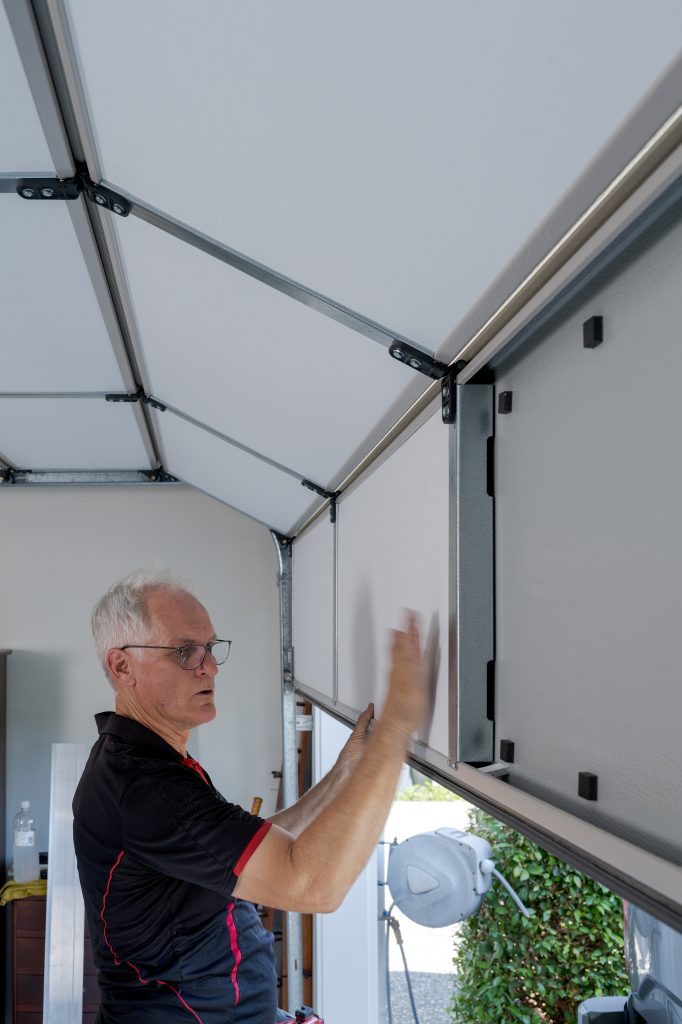
ThermaDoor foam packer spacer system holding insulation panel in place on sectional garage door

How the ThermaDoor Spacer System Works

Each ThermaDoor panel is trimmed to fit within the horizontal and vertical rails of an individual garage door panel. The foam packer spacers are then positioned between the insulation panel and the steel door surface, applying consistent, even pressure that holds the panel firmly in place through friction alone.
This system does four things that no adhesive-based installation method can replicate.

1. It Creates and Maintains the Air Gap

The foam packers are not just retention devices — they are the mechanism that creates the deliberate air cavity between the ThermaDoor panel and the steel door surface. This air gap is a core component of the system’s thermal performance, contributing to ThermaDoor’s independently verified assembly R-values of R1.43 (winter) and R1.39 (summer) under AS/NZS 4859.1/.2:2018.
 
When insulation is glued directly to the steel face of a garage door, that air gap is eliminated entirely. The result is a measurably inferior product that cannot achieve the same verified thermal performance. For a deeper look at why the air gap matters thermally, see our article on Why a Garage Door Insulation Air Gap is Essential in Australia.
 

2. It Supports Condensation Management

Steel garage doors are highly susceptible to condensation, particularly in coastal, tropical, and alpine climates. When the warm, humid air inside a garage meets the cold steel surface of the door, moisture forms. In a glued installation, that moisture is trapped between the insulation and the steel with nowhere to go — creating the ideal conditions for corrosion and mould growth behind the panel, hidden from view.
 
The ThermaDoor spacer system maintains an open air cavity that allows moisture to move and dissipate naturally. Combined with the sisalation foil backing on every ThermaDoor panel — which acts as a Class 2 vapour barrier, the same foil used to wrap Australian homes — the system is specifically designed to manage moisture rather than trap it.
 

3. It Supports the Natural Movement of the Garage Door

A sectional garage door is not a static surface. Every time it opens or closes, the panels articulate through the horizontal and vertical tracks, flexing at the hinges and vibrating as the motor engages. On a hot Australian day, the steel panels also expand and contract with temperature changes that can exceed 40°C between morning and afternoon.
 
A glued insulation panel cannot accommodate this movement. As the door flexes, the rigid adhesive bond either cracks the insulation, causes the panel to buckle, or progressively breaks the adhesive bond until the panel detaches. This is why so many homeowners who have tried DIY glue-on solutions end up with insulation panels on the garage floor within a season or two.
 
The ThermaDoor foam packer system is designed to float with the door. The panels are held by friction, not bonded to the steel, so they can accommodate the natural movement of the door without stress, cracking, or failure.
 

4. It Prevents Permanent Modification to the Door

AS/NZS 4505:2012 — the Australian Standard governing the installation and operation of garage doors — is clear that modifications to a garage door must not impede its safe and normal operation. Gluing materials directly to door panels can alter the structural dynamics of the door, interfere with the panel’s ability to flex at the hinges, and in some cases void the manufacturer’s warranty on the door itself.
 
Because ThermaDoor panels are retained mechanically and can be removed and refitted without leaving any trace on the door, the system is fully consistent with the intent of AS/NZS 4505:2012. The door operates exactly as it was designed to, and the insulation works with the door rather than against it.

The "Thermally Rated Glue" Myth — Debunked

One competitor in the Australian market has made the claim that their adhesive is “thermally rated,” implying that the glue itself contributes to the insulation performance of their product.
 
This claim does not hold up to scrutiny.
 
Glue is an adhesive. It is not an insulator. It does not carry an R-value.
 
R-value is a measure of thermal resistance — the ability of a material to slow the transfer of heat. It is determined by the thickness, density, and physical structure of the insulation material, and by the presence of a controlled air gap. No adhesive, regardless of what temperature it can withstand before failing, contributes thermal resistance to an insulation system. A product described as “thermally rated” simply means the adhesive can tolerate heat without immediately melting — it says nothing whatsoever about its ability to insulate.
 
Describing a glue as “thermally rated” in the context of insulation performance is, at best, a misunderstanding of basic building physics. At worst, it is a deliberate attempt to mislead consumers who are trying to make an informed purchasing decision.
 
The only meaningful measure of how well garage door insulation performs is the assembly R-value — the independently verified thermal resistance of the complete installed system, calculated on the actual door with all its steel framing, hinges, and thermal bridges included. ThermaDoor publishes this figure. It is independently calculated by a qualified thermal engineer to AS/NZS 4859.2:2018, and the full engineering report is available on request.
 
If a supplier cannot provide an independent engineering report for their assembly R-value, that figure is unverified — regardless of what the marketing claims are. 

A Quick Comparison

ThermaDoor Comparison Table
Factor Glue / Tape / Peel-and-Stick ThermaDoor Spacer System
Retention method Chemical adhesion Mechanical friction fit
Air gap maintained Eliminated by direct contact Created and maintained by foam packers
Accommodates door movement Rigid bond cracks or detaches Panels float with the door
Condensation management Moisture trapped against steel Open cavity allows moisture to dissipate
Adhesive failure risk Heat degrades adhesive bond over time None — no adhesive used
Permanent door modification Adhesive residue, potential warranty void Fully removable and refittable
Assembly R-value Not independently verified R1.43 winter / R1.39 summer — AS/NZS 4859.2:2018
Designed for Australian standards No AS3999 · AS/NZS 4505:2012 · AS/NZS 4859.1/.2:2018

The Bottom Line

The ThermaDoor spacer system is not a secondary feature of the product — it is fundamental to everything the system delivers. It creates the air gap. It manages condensation. It supports the natural movement of the door. It keeps the panels in place without glue, tape, or permanent modification. And it does all of this in a way that is fully consistent with Australian construction, insulation, and garage door standards.
 
That is what happens when garage door insulation is designed by a builder, for builders — with the standards front of mind from day one.
Ready to see the ThermaDoor system for yourself? View our panel sizes and current pricing in the ThermaDoor shop, or contact our team to arrange professional installation through our nationwide distributor network.

Frequently Asked Questions

Does ThermaDoor use double-sided tape to hold panels in place?

No. ThermaDoor panels are held in place using a purpose-designed foam packer spacer system that friction-fits the panel within the door’s structural framework. No tape, glue, or adhesive of any kind is used.

No. Glue is an adhesive — it does not carry an R-value and contributes nothing to the thermal resistance of an insulation system. Claims about “thermally rated glue” refer only to the adhesive’s heat tolerance, not its ability to insulate.

The air gap created by the ThermaDoor spacer system contributes to the overall assembly R-value and allows moisture to dissipate naturally, preventing condensation and mould. Glued insulation eliminates this gap entirely.

ThermaDoor is designed to be consistent with AS3999 (insulation installation), AS/NZS 4505:2012 (garage door installation and operation), and AS/NZS 4859.1/.2:2018 (insulation testing and R-value calculation).

Adhesive bonds degrade under the extreme heat cycles experienced by Australian garage doors. Glued panels typically crack, buckle, or detach within one to two seasons. The ThermaDoor friction-fit system has no adhesive bond to fail.

Your ThermaDoor Installation Options

Ready to get started?

ThermaDoor is available as both a DIY garage door insulation kit and through professional supply-and-install via our authorised distributor network.

Option 1

DIY Installation

Measure your garage door panels, order the correct ThermaDoor kit, and install the insulation yourself using our step-by-step guides. ThermaDoor DIY kits are designed for suitable sectional and tilt garage doors, with no adhesives and no permanent changes to the door.

For a general guide, indicative DIY kit pricing is shown below. 

Door Size Panels Price (from)
Single Door8 panelsFrom $330
Single Door (Large)10 panelsFrom $380
Double Door16 panelsFrom $660
Double Door (Large)20 panelsFrom $760

* Prices include GST. Freight not included — calculated at checkout based on your postcode. No obligation to buy.

Option 2

Supply & Installation

Prefer to leave it to the experts? Our trained distributor network installs ThermaDoor panels professionally across Australia. Send us a photo of your door and we will confirm availability in your area.
 
Professional installation available in most metro and regional areas. Contact us to confirm availability.

*T&C’s apply, not available in all areas. 

Sources

National Construction Code 2025 (ABCB) Australian Building Codes Board. National Construction Code 2025. Released 1 May 2026. https://ncc.abcb.gov.au/ncc-2025

NCC 2025 Part F8 — Condensation Management Australian Building Codes Board. NCC 2025 Volume One, Part F8: Condensation Management. https://ncc.abcb.gov.au/editions/ncc-2025/adopted/volume-one/f-health-and-amenity/part-f8-condensation-management

ABCB — Condensation Mitigation Proposed Changes (PCD 2025) Australian Building Codes Board. PCD 2025 — Condensation Mitigation. https://www.abcb.gov.au/pcd/pcd-2025-condensation-mitigation

NCC 2025 Key Changes — Condensation Mitigation Australian Building Codes Board. NCC 2025 Key Changes: Condensation Mitigation. https://ncc.abcb.gov.au/ncc-2025/ncc-2025-key-changes/ncc-2025-condensation-mitigation-changes

Your Home (Australian Government) — Insulation Department of Climate Change, Energy, the Environment and Water. Insulation. Your Home. https://www.yourhome.gov.au/passive-design/insulation

energy.gov.au — Insulation and Draught Proofing Department of Climate Change, Energy, the Environment and Water. Insulation and Draught Proofing. https://www.energy.gov.au/households/insulation-and-draught-proofing


Picture of Peter Hinton
Peter Hinton

Peter is a licensed builder with over 45 years of experience in the construction industry. In 2012, his expertise in energy efficient construction inspired the invention of ThermaDoor Premium garage door insulation - the original purpose made garage door insulation in Australia.

ThermaDoor is the manufacturer of the products discussed in this article and has a commercial interest in their sale. While every effort has been made to ensure the accuracy of the information presented, readers are encouraged to conduct their own research and consult qualified professionals before making purchasing decisions. All R-values cited are independently verified assembly R-values under AS/NZS 4859.1/.2:2018.
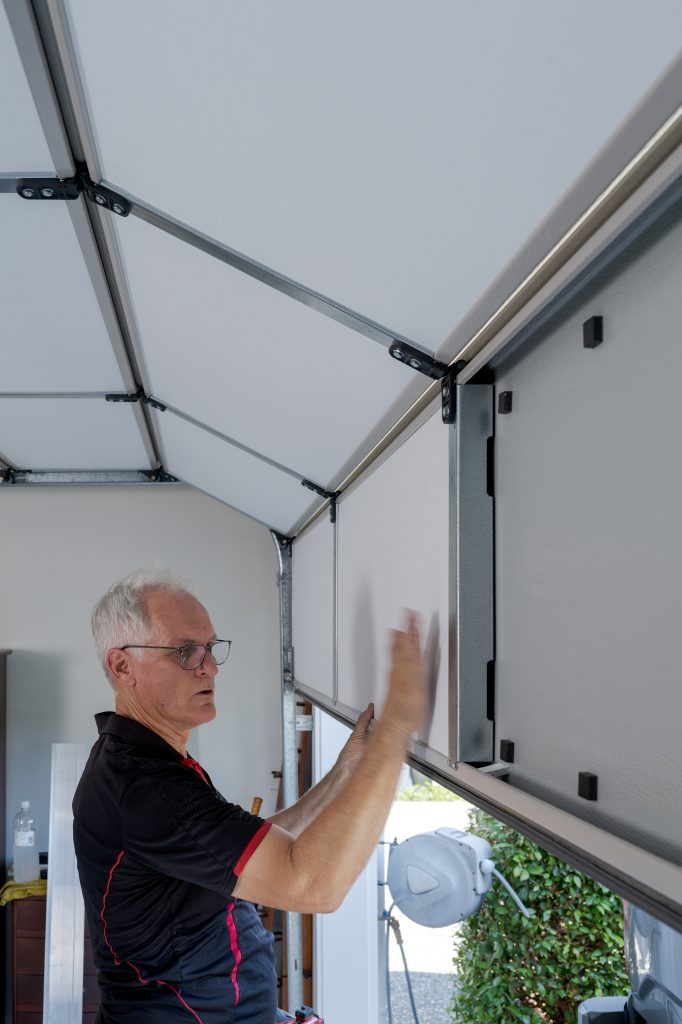
ThermaDoor foam packer spacer system creating air gap between insulation panel and garage door

ThermaDoor Installation

Let our experts handle installation for you
Or Ask Us A Question

Call, text, or send an enquiry below to see if we have an installer in your area.

Make an Enquiry