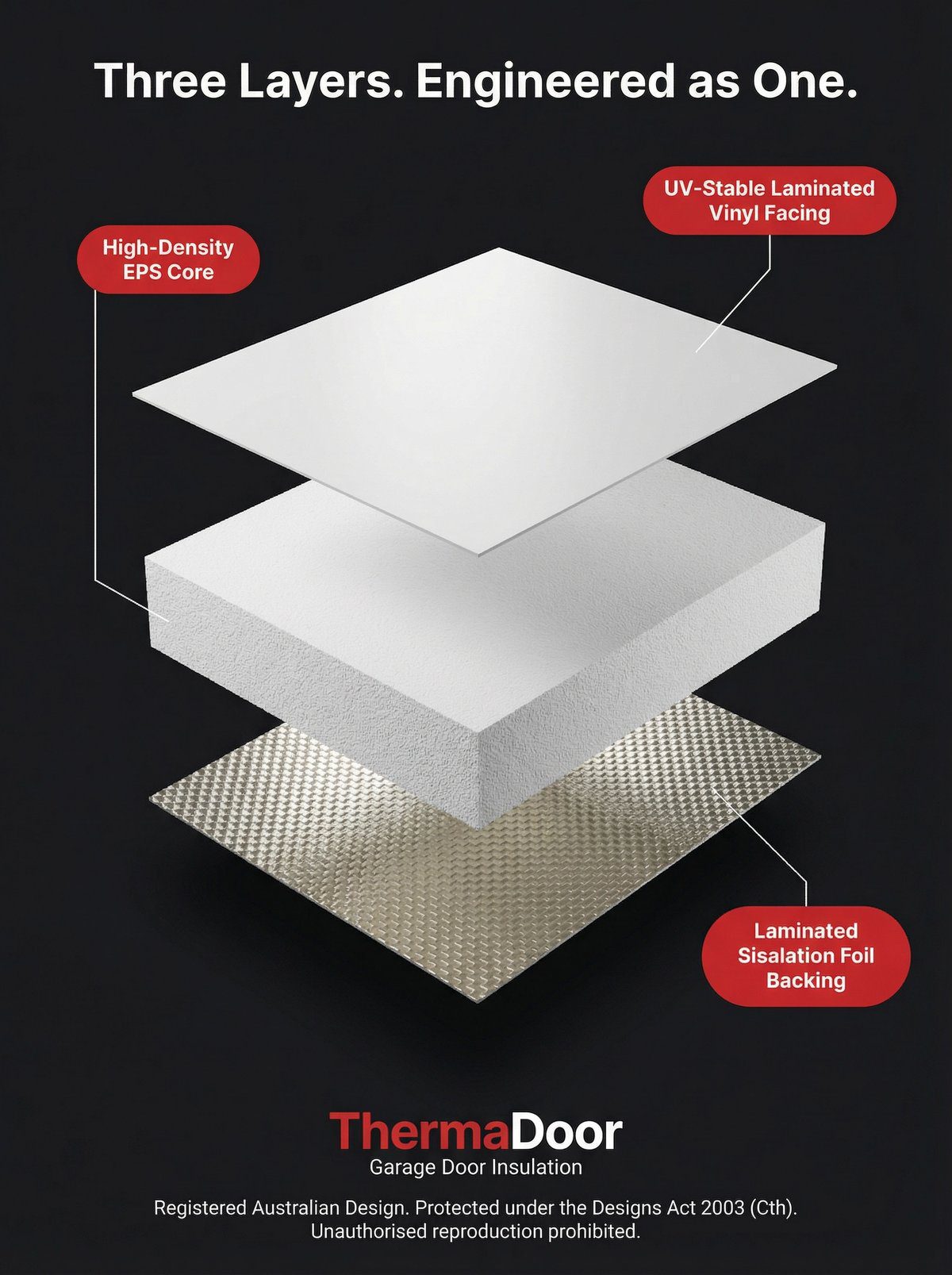
The garage door is not automatically included in a Home Energy Rating assessment. However, where the garage is attached to the home or adjoins living areas, it can be relevant to the energy performance discussion. For it to be considered, the assessor needs verified assembly R-value data — not a material-only claim or no data at all.
A material R-value measures the thermal resistance of the insulation panel alone. An assembly R-value accounts for the complete installed door, including the steel skins, hinges, joins, tracks and air gaps that conduct heat through the door. Assembly R-values are more accurate and more useful for energy assessors because they reflect how the door actually performs once installed.
Yes. For new builds and major renovations, ThermaDoor should be identified by name in the plans and specifications before the assessor reviews them. This ensures the correct verified assembly data is part of the documentation from the outset. Ask your builder, designer or architect to include it by name.
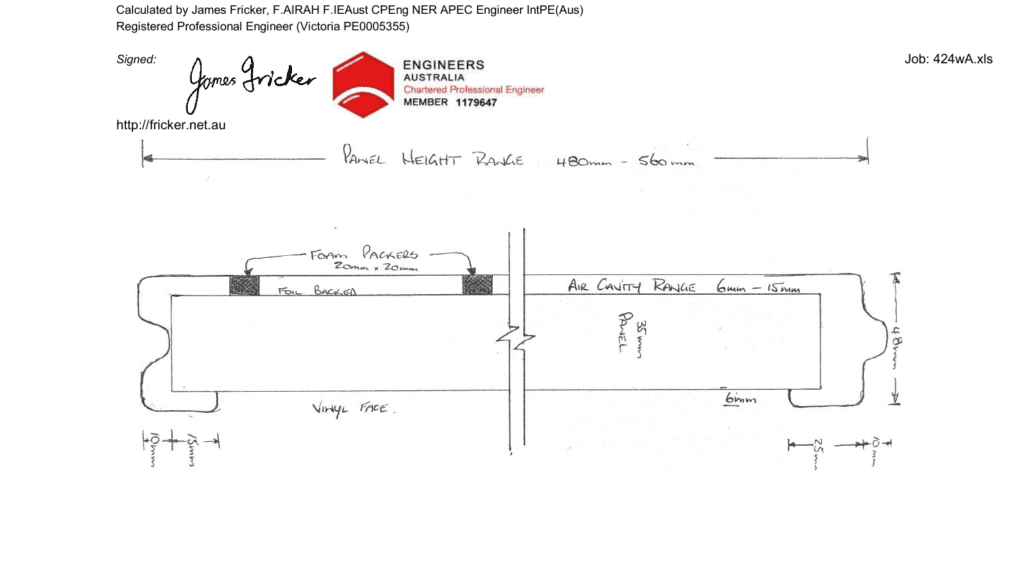
Yes. ThermaDoor’s R-values are supported by an independent thermal performance report prepared by James Fricker, F.AIRAH F.IEAust CPEng NER APEC Engineer IntPE(Aus), of Engineers Australia. The report documents verified complete installed garage door assembly R-values of R1.43 winter and R1.39 summer, tested under AS/NZS 4859.1:2018 and AS/NZS 4859.2:2018. The report is available through the ThermaDoor Trade & Industry Hub.
Yes. The Australian Government has launched a dedicated Home Energy Rating pathway for existing homes, designed to help homeowners understand their home’s current performance and identify upgrade opportunities. Where the garage is attached to the home, garage door insulation can be part of that conversation. ThermaDoor’s documented product information gives assessors the data they need to include it.
Your ThermaDoor Installation Options
ThermaDoor is available as both a DIY garage door insulation kit and through professional supply-and-install via our authorised distributor network.
Option 1
Measure your garage door panels, order the correct ThermaDoor kit, and install the insulation yourself using our step-by-step guides. ThermaDoor DIY kits are designed for suitable sectional and tilt garage doors, with no adhesives and no permanent changes to the door.
For a general guide, indicative DIY kit pricing is shown below.
| Door Size | Panels | Price (from) |
|---|---|---|
| Single Door | 8 panels | From $330 |
| Single Door (Large) | 10 panels | From $380 |
| Double Door | 16 panels | From $660 |
| Double Door (Large) | 20 panels | From $760 |
* Prices include GST. Freight not included — calculated at checkout based on your postcode. No obligation to buy.
Option 2
*T&C’s apply, not available in all areas.

Peter is a licensed builder with over 45 years of experience in the construction industry. In 2012, his expertise in energy efficient construction inspired the invention of ThermaDoor Premium garage door insulation - the original purpose made garage door insulation in Australia.
ThermaDoor is the manufacturer of the products discussed in this article and has a commercial interest in their sale. While every effort has been made to ensure the accuracy of the information presented, readers are encouraged to conduct their own research and consult qualified professionals before making purchasing decisions. All R-values cited are independently verified assembly R-values under AS/NZS 4859.1/.2:2018.
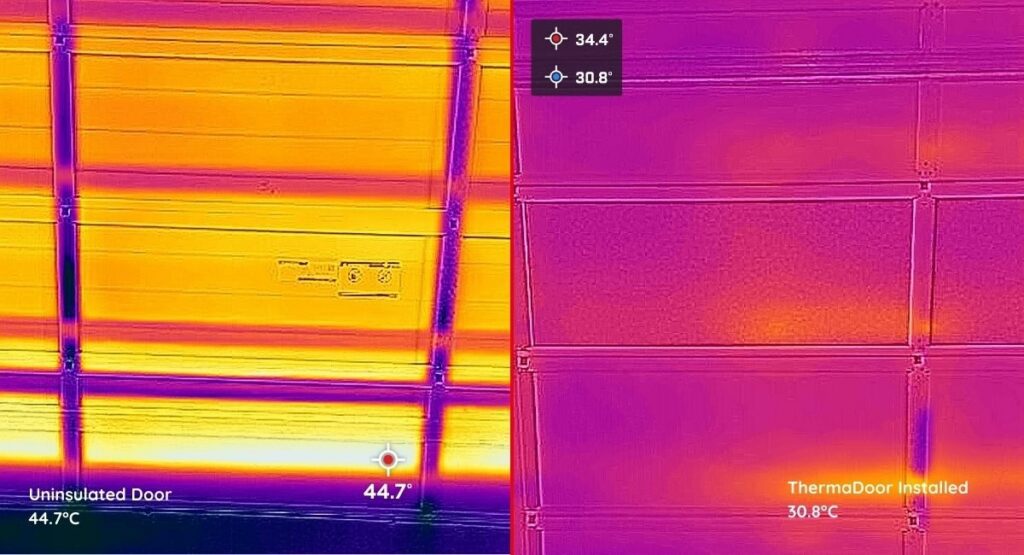
Call or send an enquiry below to see if we have an installer in your area.
"*" indicates required fields
